
Introduction
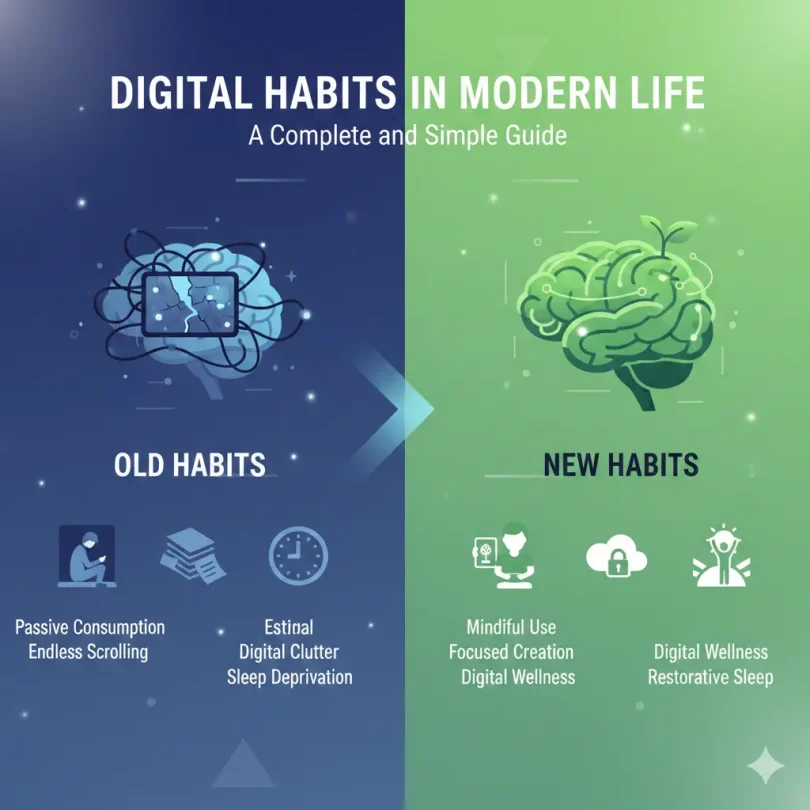
Digital habits in modern life shape how we wake up, work, learn, and relax every single day. From checking our phones in the morning to watching videos at night, our routines are closely connected with screens, apps, and the internet. These habits can make life easier, faster, and more exciting. At the same time, they can also create stress, distraction, and tiredness if not handled in a balanced way. That is why understanding digital habits in modern life is so important for everyone today.
In the past, people used notebooks, letters, and face to face talks to manage their daily tasks. Now we use smartphones, email, social media, and cloud tools for almost everything. Students learn online, workers meet on video calls, and families stay connected through messages and photos. These changes have created new ways of living that bring both comfort and challenges. When we use digital tools with care, they help us grow and stay organized. When we use them too much, they can affect our focus and peace.
This guide will help you clearly understand what digital habits are, why they matter, and how to improve them. You will also learn how to avoid common mistakes and build a healthy digital lifestyle. By the end, you will have simple steps that fit easily into your daily routine.
What is Digital Habits in Modern Life?
Digital habits in modern life are the daily behaviors and routines we follow while using digital devices and online platforms. These habits include how often we check our phones, how long we stay on social media, how we use apps for work, and how we relax with online entertainment.
For example, checking messages after waking up, using navigation apps while traveling, and reading news online are all digital habits. Some of these habits save time and give useful information. Others may slowly become distractions if we are not careful.
In simple words, digital habits are the way we live with technology. They shape how we think, communicate, and manage our time in a modern digital world.
Why is Digital Habits in Modern Life Important?
Digital habits in modern life are important because they directly affect our health, productivity, and relationships. The way we use technology can either support our goals or pull us away from them.
When digital habits are healthy, they help us stay connected, learn faster, and complete tasks easily. When they are unhealthy, they can cause eye strain, poor sleep, stress, and loss of focus. They also influence how children grow and how adults perform at work.
Understanding these habits allows us to take control. Instead of letting devices control our time, we can use them in a smart and balanced way that improves our quality of life.
Detailed Step-by-Step Guide
Step 1: Observe Your Current Habits
The first step is to notice how you use your devices every day. Track how much time you spend on apps, websites, and screens. Most phones now have built in tools that show this data.
Write down when you use technology the most. This could be during work hours, before sleeping, or while eating meals. Awareness is the base of improvement.
Step 2: Set Clear Goals

Decide what you want to change. Maybe you want to reduce social media time or improve focus at work. Set simple and clear goals that are easy to measure.
For example, aim to check social media only twice a day or stop using your phone one hour before bedtime.
Step 3: Organize Your Digital Space
Clean up your devices. Remove apps you do not use and organize files into folders. A clean digital space makes it easier to find what you need and reduces stress.
Turn off unnecessary notifications that disturb your focus.
Step 4: Create Healthy Routines
Add digital breaks to your day. After every hour of screen use, take a short break to stretch or rest your eyes.
Set fixed times for checking email and messages so they do not interrupt your work all day.
Step 5: Use Tools Wisely
Use apps that help you manage time, block distractions, or track habits. These tools support better digital habits in modern life.
However, do not install too many tools. Choose only what you really need.
Step 6: Review and Adjust
Every week, review your progress. See what worked and what did not. Adjust your goals and routines as needed.
Improving digital habits is a continuous process, not a one time task.
Benefits of Digital Habits in Modern Life
- Better time management and productivity
- Easier communication with family and friends
- Faster access to information and learning
- Improved organization and planning
- More opportunities for work and business
- Easy entertainment and relaxation
- Stronger global connections
Disadvantages / Risks
- Too much screen time can harm eyes and sleep
- Social media can cause stress and comparison
- Distractions reduce focus and work quality
- Online addiction may develop
- Privacy and security risks
- Less physical activity
- Reduced face to face interaction
Common Mistakes to Avoid
Many people make mistakes while managing digital habits in modern life. One common mistake is using devices without limits. This leads to wasted time and tiredness.
Another mistake is checking notifications every minute. This breaks focus and increases stress. Some people also ignore digital security, which puts their data at risk.
Avoid using screens before sleep, as it affects rest. Also, do not believe everything you see online. Always check facts from reliable sources.
FAQs
1. What are digital habits in modern life?
Digital habits in modern life are the daily ways people use phones, computers, and the internet to work, learn, and relax.
2. Can digital habits affect mental health?
Yes, too much screen time and social media use can cause stress and anxiety. Balanced use supports better mental health.
3. How can I reduce screen time?
You can reduce screen time by setting limits, turning off notifications, and planning offline activities.
4. Are digital habits important for students?
Yes, they help students learn online, stay organized, and communicate with teachers.
5. What is a healthy digital routine?
A healthy routine includes regular breaks, limited social media use, and screen free time before sleep.
6. Can digital tools improve productivity?
Yes, when used correctly, digital tools help manage tasks, schedules, and communication better.
Expert Tips & Bonus Points
- Start your day without checking your phone for at least thirty minutes.
- Keep devices out of the bedroom for better sleep.
- Use focus modes while working.
- Plan one digital free day each week.
- Teach children healthy digital habits early.
Conclusion
Digital habits in modern life play a powerful role in shaping how we live today. From work and study to relationships and entertainment, our daily routines are closely connected to screens and online tools. When these habits are used in a smart and balanced way, they can make life easier, more organized, and more enjoyable. They help us stay connected, learn new skills, and manage tasks with greater speed and accuracy.
However, when digital habits become uncontrolled, they can lead to stress, poor health, and loss of focus. That is why it is important to stay aware of how we use technology. Simple steps like setting limits, taking breaks, and organizing our digital space can make a big difference. Small changes done every day create long term improvements.
By understanding and improving your digital habits, you take control of your time and energy. This leads to a healthier, happier, and more productive life in the modern digital world.